If you are selling a lakefront home in West Bloomfield, you are not just putting a house on the market. You are selling shoreline, views, access, and a lifestyle that buyers cannot get on every street. That also means pricing, timing, and presentation need to be more precise than they would be for a typical listing. In this guide, you will learn how to prepare, market, and position your property so buyers can clearly see its value. Let’s dive in.
Understand the West Bloomfield lakefront market
West Bloomfield stands out as one of the most lake-oriented communities in Southeast Michigan. The township master plan notes 28 lakes and numerous smaller ponds used for boating, swimming, and fishing. It also notes that many lakes have organized lake boards or associations, which can affect how a property is used, maintained, and marketed.
That local setting matters when you sell. A buyer looking at a home on Cass Lake, Pine Lake, Walnut Lake, Upper Straits Lake, Orchard Lake, or West Bloomfield Lake is often comparing more than square footage. They are comparing frontage, privacy, dock setup, access details, and the overall waterfront experience.
Current market data points to a balanced but active environment. Realtor.com reports a March 2026 median listing price of $425,000, 29 median days on market, and a 99% sale-to-list ratio in West Bloomfield Township. Zillow places the typical West Bloomfield home value at $456,897 and says homes go pending in about 13 days, which shows that serious buyers are active but still paying close attention to pricing.
Price your lakefront home carefully
Lakefront homes often command a premium, but that premium is not automatic or identical from one property to the next. Research on waterfront valuation shows that water views and water proximity can add value, but the amount depends on the market, the body of water, and the quality of the view. In West Bloomfield, that means your home should be measured against true waterfront comparables, not just nearby homes with similar size.
A smart pricing strategy should account for details such as:
- Lake frontage
- Quality of water views
- Shoreline condition
- Privacy
- Dock access
- Boat lift or hoist setup
- Whether access is private, shared, or association-managed
- The specific lake itself
In a balanced market, overpricing can slow momentum. Even if your property has standout features, buyers still compare it against other waterfront opportunities and expect the price to match the full package.
For many sellers, this is where experienced guidance makes a difference. A strong strategy is not just about reading comps. It is about understanding how waterfront details, improvements, and presentation affect perceived value.
Choose the right time to list
Timing can matter even more for lakefront homes because the setting is part of the product. Zillow Research found that Detroit-area homes listed in the last two weeks of May sold for 3.1% more than average in 2025, or about $8,000 more. For a West Bloomfield waterfront property, that timing lines up well with what buyers want to see.
Late spring often gives you the best combination of open water, green landscaping, cleaned-up shoreline, and stronger natural light for photography. Buyers can better understand the lot, the views, and how the home connects to the lake. If you list too early, the property may not show its full lifestyle appeal.
That said, timing only helps if the home is ready. If you need shoreline work, staging, repairs, or document gathering, start early so you can launch when the property looks complete and market-ready.
Prepare the shoreline before listing
For a lakefront sale, outdoor presentation is just as important as interior condition. Buyers notice the shoreline, the dock area, water access, and how easy it feels to enjoy the property. If those areas look cluttered or unclear, it can weaken the first impression.
West Bloomfield has a local ordinance that allows certain off-season storage for lots abutting a navigable watercourse, including up to two boats or watercraft with trailers, along with docks, boat lifts, boat hoists, and floating swim platforms in the front lake yard. The ordinance also prohibits street storage and blocking sidewalks or pedestrian paths, and it allows one licensed and operable boat or watercraft in a driveway from April 1 to October 31.
For sellers, that means cleanup matters. Even if storage is allowed, buyers respond better when the lake side of the property feels open, organized, and easy to picture themselves using.
Before listing, focus on:
- Removing excess seasonal equipment from view where possible
- Cleaning and organizing the dock area
- Trimming landscaping that blocks views
- Making paths to the shoreline feel clear and safe
- Cleaning exterior glass so the water view reads well from inside
Know what shoreline work may need permits
If you are thinking about making improvements before selling, do not assume every waterfront project can be done quickly. The Michigan Department of Environment, Great Lakes, and Energy, or EGLE, says permits under Part 301 are required for many inland lake and stream projects. These reviews consider public trust and riparian rights impacts.
EGLE says a permit is required for permanent docks or boat hoists on inland lakes or streams. A seasonal private, non-commercial dock or boat hoist may not require a permit if it does not unreasonably interfere with others or with water flow. EGLE also identifies common land-water interface projects such as docks, piers, boat wells, boat hoists, boat lifts, boardwalks, fences, and decks.
Timing matters here too. EGLE says a complete joint permit review usually takes 30 to 90 days, and spring and summer are the busiest seasons. If you are planning shoreline work to improve saleability, it is wise to start well before your target listing date.
Gather the documents buyers will ask for
Waterfront buyers usually ask more questions than buyers of a standard suburban home. They want to understand what they are getting, what transfers with the property, and what rules may apply. If you can answer those questions early, the transaction tends to move more smoothly.
Useful pre-list documents can include:
- Survey n- Deed
- HOA or lake-association documents
- Permits for docks, lifts, seawalls, or shoreline work
- Maintenance records tied to waterfront improvements
These documents help clarify access, ownership, use rights, and transfer items. In West Bloomfield, where many lakes have boards or associations, this information is especially important.
Market the lake, not just the house
A lakefront home should be marketed as a waterfront property first and a house second. That does not mean the interior is less important. It means the water, views, and access need to be clearly built into the story buyers see from the first photo onward.
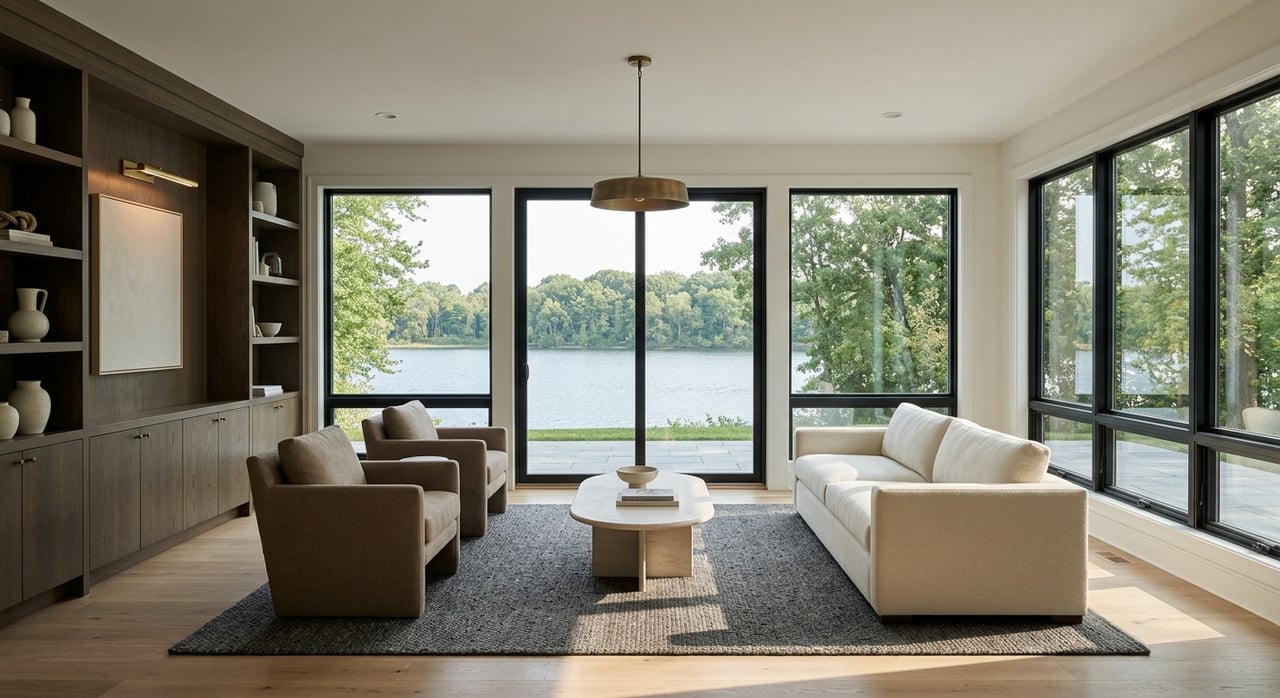
Because water-view premiums are real but variable, presentation should highlight the lake as a primary asset. Keep interior sightlines open, use minimal window coverings, and make sure the glass is spotless. Buyers should be able to walk in and immediately understand the view.
Photography should capture:
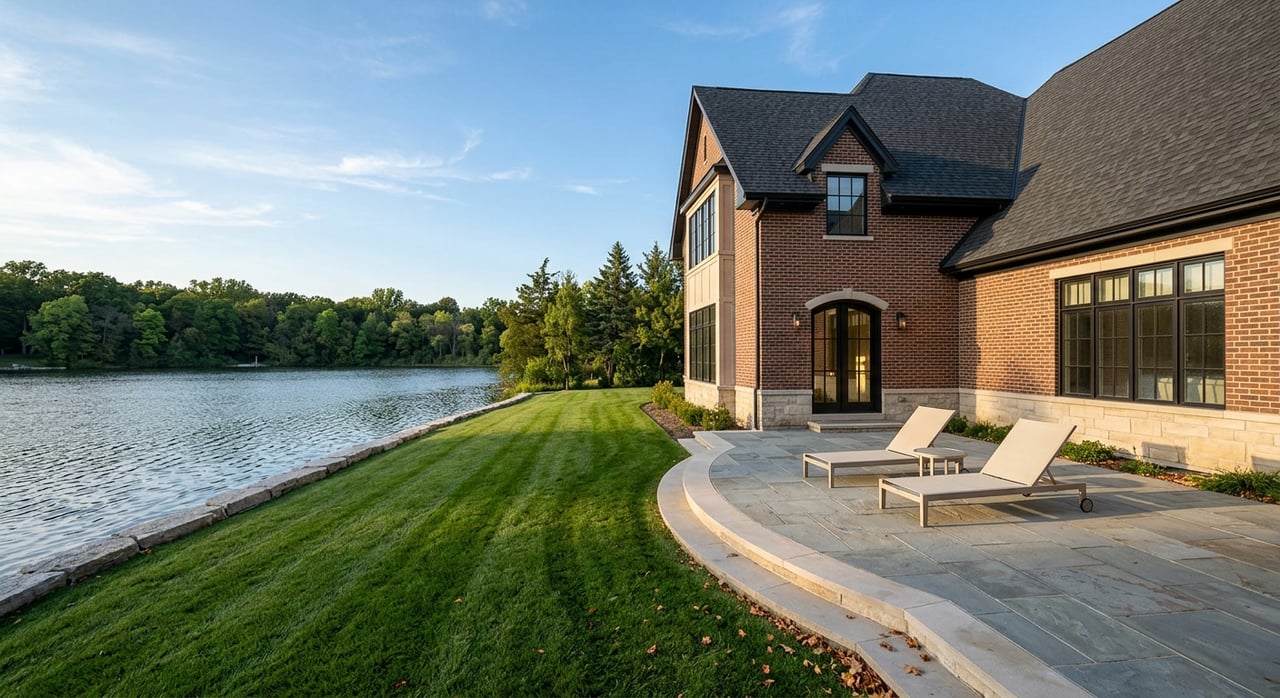
- The shoreline and water from the yard
- The view from major interior rooms
- The dock, lift, or hoist area if applicable
- How the house connects to outdoor living spaces
- Open water and landscaping during strong natural light
Your listing description should also explain key waterfront facts clearly. That includes whether access is deeded, shared, or association-managed, whether a dock or lift transfers with the home, and whether a lake board or homeowners association applies.
Tell the broader West Bloomfield lifestyle story
Buyers shopping for a lakefront home are often buying into a daily routine as much as a property. West Bloomfield gives you a strong lifestyle story to support that marketing. WB Parks says the township park system spans 580 acres across 14 parks.
That broader outdoor setting can help frame the home within the community. Parks and recreation assets such as Pine Lake Park, Marshbank Park, the West Bloomfield Trail, and West Bloomfield Woods Nature Preserve reinforce the appeal of an active, outdoor-focused lifestyle.
This does not replace the need for strong property details. It supports them. When buyers can connect the home to the wider lake-and-outdoors character of West Bloomfield, the listing often feels more complete and memorable.
Why expert strategy matters for a waterfront sale
Selling a lakefront home usually involves more moving parts than selling a typical property. Pricing is more nuanced, prep work can involve permits or transfer questions, and buyers tend to scrutinize waterfront details closely. That is why a thoughtful plan matters from the start.
With a background that spans sales, valuation, building insight, and practical problem-solving, Craig Minoletti helps sellers think beyond the usual checklist. From pricing a home against the right waterfront comparables to identifying improvements that support value, the goal is to position your property with clarity and confidence.
If you are preparing to sell a lakefront home in West Bloomfield, the right plan can help you protect value and reduce avoidable surprises. For a tailored pricing strategy and practical next steps, connect with Craig Minoletti.
FAQs
When is the best time to list a lakefront home in West Bloomfield?
- Late spring is often a strong window because landscaping, shoreline, and open water are visible, and Zillow Research found Detroit-area homes listed in the last two weeks of May sold for 3.1% more than average in 2025.
What waterfront improvements may need permits for a West Bloomfield sale?
- EGLE says many inland lake and stream projects may require permits, including some permanent docks or boat hoists, and review timelines can take 30 to 90 days.
What documents should you gather before selling a West Bloomfield lakefront home?
- Start with the survey, deed, HOA or lake-association documents, and any permits or maintenance records for docks, lifts, seawalls, or shoreline work.
What waterfront details should a West Bloomfield listing explain clearly?
- Your marketing should clearly state whether access is deeded, shared, or association-managed, whether a dock or lift transfers with the property, and whether a lake board or homeowners association applies.
What features should be photographed for a West Bloomfield lakefront listing?
- Focus on the shoreline, dock area, major water views, the connection between interior rooms and outdoor spaces, and clean sightlines that show the lake as a primary feature.